EFFECTS OF CHRONIC CONSUMPTION OF CALABASH CHALK ON OXIDATIVE STRESS MARKERS AND LIPID PROFILE IN WISTAR RATS
DOI:
https://doi.org/10.26538/tjdr/v3i2.1Keywords:
Oxidative stress, calabash chalk, lipid profile, cardiac risk ratio, atherogenic indexAbstract
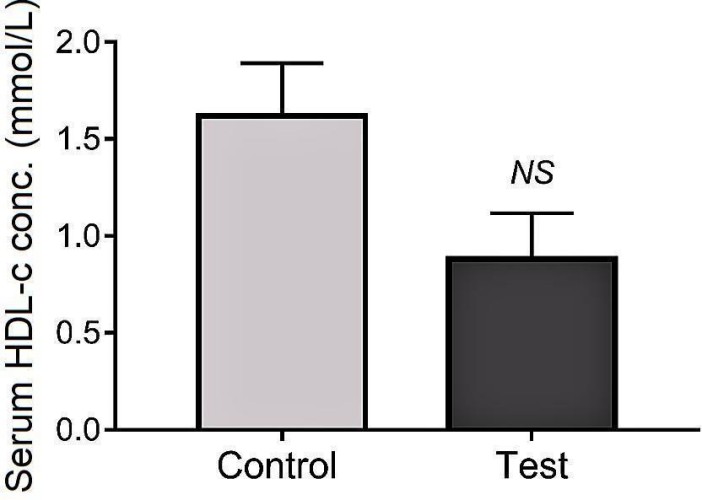
Purpose: Calabash chalk consumption has been reported to cause various systemic alterations, which may affect some homeostatic mechanisms in the body. This study aimed to demonstrate the effect of chronic consumption of calabash chalk on oxidative stress markers and lipid profile. Methods: Ten Wistar rats weighing 160-180 g were divided randomly into 2 groups of 5 rats each. Group one was the control group and received 1 ml of distilled water daily, while group two served as the test group and received 1 ml of calabash chalk suspension orally daily. In addition, all animals were given food and water ad libitum. The experiment lasted for 28 days, followed by animal sacrifice; oxidative stress markers- {superoxide dismutase (SOD), catalase (CAT), malondialdehyde (MDA) and glutathione peroxidase (GPx)}, lipid profile- {triglycerides (TG), total cholesterol (TC), very low-density lipoproteins (VLDL), high-density lipoproteins (HDL), and low-density lipoproteins (LDL)}, cardiac risk ratio, and atherogenic index of plasma (AIP) were studied. Results: SOD, CAT, and GPx concentrations were significantly lower (p<0.01) in the test group compared to the control. Conversely, MDA concentration was significantly higher (p<0.01) in the test group compared with the control, while serum TG, HDL, VLDL, and TC concentrations were not significantly different between the 2 groups. However, LDL, AIP, and cardiac risk ratio were significantly increased compared with the control. Conclusion: Chronic consumption of calabash chalk reduces the efficiency of antioxidant defenses, leading to increased oxidative stress.Downloads
References
1. Brevik EC, Slaughter L, Singh BR, Steffan JJ, Collier D, Barnhart P, Pereira P. Soil and human health: current status and future needs. Air Soil Water Res. 2020; 13:1178622120934441. doi:10.1177/1178622120934441.
2. Bonglaisin JN, Kunsoan NB, Bonny P, Matchawe C, Tata BN, Nkeunen G, Mbofung CM. Geophagia: benefits and potential toxicity to humans. Front Public Health. 2022; 10:893831. doi:10.3389/fpubh.2022.893831.
3. Voltura E. Looking at the dietary habits, health, and distributions of parrots through the lens of geophagy to improve management outcomes in conservation arks and parks [dissertation]. College Station (TX): Texas A&M University; 2020.
4. Ben-Alon L, Ayalon SY. Can we eat earth buildings? The mineralogical commonality of earth building and edible earth practices. J Cult Herit Manag Sustain Dev. 2020; 10(2):175-189.
5. Piatoikina AS, Lyakhova AA, Semennov IV, Zhilyaeva TV, Kostina OV, Zhukova ES, Antonova KD, Mikhailov AG. Association of antioxidant deficiency and levels of protein and lipid peroxidation products in first-episode schizophrenia. J Mol Neurosci. 2022; 72(2):217-225.
6. Unim AP, Godwin GC, Irene OE, Clement OO, Gabriel IE. Gastrointestinal and hepatobiliary effects of aqueous extract of Costus afer leaves in diabetic Wistar rats. Pak J Biochem Mol Biol. 2024; 57(2):35-58.
7. Alkadi H. A review on free radicals and antioxidants. Infect Disord Drug Targets. 2020; 20(1):16-26.
8. Goutami L, Jena SR, Swain A, Samanta L. Pathological role of reactive oxygen species in female reproduction. In: [Editor(s) surname initials], editors. Oxidative stress and toxicity in reproductive biology and medicine. Cham: Springer; 2022. p. 201-220.
9. Rajendran P, Nandakumar N, Rengarajan T, Palaniswami R, Gnanadhas EN, Lakshminarasaiah U. Antioxidants and human diseases. Clin Chim Acta. 2024; 546:200-206.
10. Lemasters JJ, Jaeschke H. Oxidative stress and inflammation in the liver. In: Arias IM, Alter HJ, Boyer JL, Cohen DE, Shafritz DA, Thorgeirsson SS, editors. The liver: biology and pathobiology. 6th ed. Hoboken: Wiley; 2020. p. 714-727.
11. Tong Y, Hua X, Zhao W, Liu D, Zhang J, Zhang W. Protective effects of Lactobacillus plantarum CCFM436 against acute manganese toxicity in mice. Food Biosci. 2020; 35:100583.
12. Odu PO, Ujah GA, Uket JM, Odu VK, Inwang UA. Costus afer leaves extract ameliorates stress-induced alterations in hematological and lipid parameters in Wistar rats. Trop J Nat Prod Res. 2025; 9(6):2821-2826. doi:10.26538/tjnpr/v9i6.63.
13. Himoto T, Masaki T. Current trends on the involvement of zinc, copper, and selenium in hepatocarcinogenesis. Nutrients. 2024; 16(4):472.
14. Yuan F, Yin S, Xu Y, Xiang L, Wang H, Li Z, Zhang X, Liu Y. The richness and diversity of catalases in bacteria. Front Microbiol. 2021; 12:645477.
15. Moretti E, Cerretani D, Noto D, Signorini C, Iacoponi F, Collodel G. Relationship between semen IL-6, IL-33 and malondialdehyde in human seminal plasma. Reprod Sci. 2021; 28(8):2136-2143.
16. Muthukumar K, Rajakumar S, Sarkar MN, Nachiappan V. Glutathione peroxidase 3 protects phospholipids during cadmium-induced oxidative stress. Antonie Van Leeuwenhoek. 2021; 114(4):761-771.
17. Tang SP, Mao XL, Chen YH, Yan LL, Ye LP, Li SW. Reactive oxygen species induce fatty liver and ischemia-reperfusion injury by promoting inflammation. Front Immunol. 2022; 13:870239.
18. Watson F, Austin P. Physiology of human fluid balance. Anaesth Intensive Care Med. 2021; 22(10):644-651.
19. Hamza TA, Hadwan MH. New spectrophotometric method for the assessment of catalase activity in biological tissues. Curr Anal Chem. 2020; 16(8):1054-1062.
20. Valotto Neto LJ, de Araujo MR, Moretti RC, Machado NM, Joshi RK, Buglio DS, da Silva FC, dos Santos TC, Pereira LG. Neuroprotective effects of Bacopa monnieri: a systematic review. Antioxidants. 2024; 13(4):393.
21. Kitchawengkul N, Prakobkij A, Anutrasakda W, Yodsin N, Jungsuttiwong S, Amatatongchai M, Pimanprom W, Sananmuang T. Peroxidase-mimicking carbon dots for cholesterol sensing. Anal Chem. 2021; 93(18):6989-6999.
22. Mahboob S, Tahir K, Ali S. Industrial applications of microbial lipases: a systematic review. Int J Biol Biotechnol. 2022; 19:171-182.
23. Allain CC, Poon LS, Chan CSG, Richmond W, Fu PC. Enzymatic determination of total serum cholesterol. Clin Chem. 1974;20(4):470–475.
24. Friedewald WT, Levy RI, Fredrickson DS. Estimation of the concentration of low-density lipoprotein cholesterol in plasma, without use of the preparative ultracentrifuge. Clin Chem. 1972;18(6):499–502.
25. Dobiásová M. Atherogenic index of plasma [log(triglycerides/HDL-cholesterol)]: Theoretical and practical implications. Clin Chem. 2004;50(7):1113-1115
26. Castelli WP, Abbott RD, McNamara PM. Summary estimates of cholesterol used to predict coronary heart disease. Circulation. 1983;67(4):730-734.
27. Paglia DE, Valentine WN. Studies on the quantitative and qualitative characterization of erythrocyte glutathione peroxidase. J Lab Clin Med. 1967;70(1):158-169
28. Galasso M, Gambino S, Romanelli MG, Donadelli M, Scupoli MT. Catalase regulation and function in cancer. Free Radic Biol Med. 2021; 172:264-272.
29. Sharma S, Bhattarai S, Ara H, Sun G, Bhuiyan MS, Kevil CG, Williams JB, Smith LH. SOD2 deficiency causes lethal cardiomyopathy. Redox Biol. 2020; 37:101740.
30. Bassey IE, Emodi BA, Akpan UO, Iyakndue IF, Anakebe EA, Icha BE, Njoku CI, Udoh US, Umoh UA. Oxidative stress in prostate cancer patients receiving androgen deprivation therapy. JCO Glob Oncol. 2020; 6:1481-1489.
31. Liang S, Wang C, Zhang J, Liu Z, Bai Y, Chen Z, Wong LL, Hernandez F. Triglyceride–glucose index and coronary artery disease: a meta-analysis. Cardiovasc Diabetol. 2023; 22(1):170.
32. Unim AP, Edet OU, Okoi OC, Okpo-ene AI, Chijindu OM, Uquetan US, Essien VA. Evaluation of gastroprotective potentials of papain and fucoidan in Wistar rats. Ibom Med J. 2026;19(1):84-91.
33. Damato A, Vianello F, Novelli E, Balzan S, Gianesella M, Giaretta E, Rossi F, Bianchi A. Clay minerals and animal physiology. Front Vet Sci. 2022; 9:889612.
34. Pirahanchi Y, Sinawe H, Dimri M. Biochemistry of LDL cholesterol [Internet]. Treasure Island (FL): StatPearls Publishing; 2022. Available from: https://www.ncbi.nlm.nih.gov/books/NBK557758/ (Accessed January 10, 2026).
35. Pownall HJ, Rosales C, Gillard BK, Gotto AM. High-density lipoproteins and atherogenesis. Nat Rev Cardiol. 2021; 18(10):712-723.
36. Xepapadaki E, Zvintzou E, Kalogeropoulou C, Filou S, Kypreos KE. Antioxidant function of HDL. Angiology. 2020; 71(2):112-121.
37. Calcaterra I, Tufano A, Lupoli R, Iannuzzo G, Emmi G, Di Minno MN, Di Minno MND. Cardiovascular disease in antiphospholipid syndrome. Pol Arch Intern Med. 2020; 130:102-110.
38. Packard C, Chapman MJ, Sibartie M, Laufs U, Masana L. Intensive LDL-cholesterol lowering and cardiovascular risk. Heart. 2021; 107(17):1369-1375.
39. Zhu Y, Chen M, Liu K, Gao A, Kong X, Liu Y, Wang Z, Sun J, Qi R, Li H. Atherogenic index of plasma and restenosis risk. J Atheroscler Thromb. 2022; 29(8):1226-1235.
40. American Heart Association. Lead and mercury exposure and cholesterol levels [Internet]. ScienceDaily. 2018. Available from: https://www.sciencedaily.com (Accessed January 10, 2026).
Downloads
Published
Issue
Section
License

This work is licensed under a Creative Commons Attribution-NonCommercial-ShareAlike 4.0 International License.